Strength-Welded Tube to Tubesheet Joint in Boiler and Pressure Vessel Fabrication
2026-03-18 14:52:04
There is a fundamental distinction that every boiler and pressure vessel fabricator learns early in their career: not all tube-to-tubesheet welds are created equal. Some are just seal welds—thin, cosmetic passes meant to prevent leaks. Others are something entirely different. A strength-welded tube to tubesheet joint is designed to carry load, to transfer axial forces from the tube into the tubesheet, and to keep that tube locked in place when pressure spikes and thermal cycles try to pull it loose.
We have been building equipment for this exact application for over fifteen years. When a fabricator calls us about a high-pressure boiler or a code-stamped pressure vessel, they are not asking for seal welds. They are asking how to consistently produce strength weld tube to tubesheet connections that meet ASME requirements and survive decades of service.
Defining the Strength-Welded Joint
The difference between a seal weld and a strength-welded tube to tubesheet joint comes down to load transfer. A seal weld simply bridges the gap between tube and tubesheet face. It keeps fluid from leaking, but if you pulled on the tube hard enough, that weld would fail. A strength weld, by contrast, is sized and configured to carry the full axial load that the tube can generate under design conditions .
This distinction matters because codes treat them differently. The ASME Boiler and Pressure Vessel Code has specific requirements for strength welds, including how they must be qualified and what dimensions they must meet . TEMA standards also address this, though industry experts have long suggested that clearer definitions are needed .
For a strength weld tube to tubesheet to perform as intended, the weld throat must be sufficient to develop the full tensile strength of the tube. That usually means a protruding tube configuration with a fillet weld of calculated size, or a flush configuration with deep penetration. Either way, the weld becomes a structural element, not just a seal.
Why Boilers and Pressure Vessels Demand Strength Welds
Boilers and pressure vessels live hard lives. They cycle from cold start to operating temperature thousands of times. Tubes expand and contract. Pressure fluctuates. If a strength-welded tube to tubesheet joint is undersized or inconsistent, it becomes the weak link. Eventually, it cracks, leaks, or pulls loose.
In feedwater heaters, which are essentially pressure vessels designed to preheat boiler feedwater, the stakes are even higher. These units operate at high pressures and temperatures, and a tube failure can cause catastrophic damage to turbine blades downstream. Research has shown that welded-and-expanded joints in these applications should be full-strength and full-depth expanded to ensure reliability .
The combination of welding and expansion creates redundancy. The strength-welded tube to tubesheet joint carries the axial load, while the expansion ensures intimate contact between tube and hole, blocks crevice corrosion paths, and provides additional mechanical interlock when grooves are used . This hybrid approach is standard practice in high-pressure boiler fabrication.
Equipment for Consistent Strength Welds
Producing strength weld tube to tubesheet connections reliably across hundreds or thousands of tubes requires equipment that removes human variability. A manual welder might maintain quality for the first fifty joints, but fatigue, distraction, and inconsistent technique inevitably cause variation.
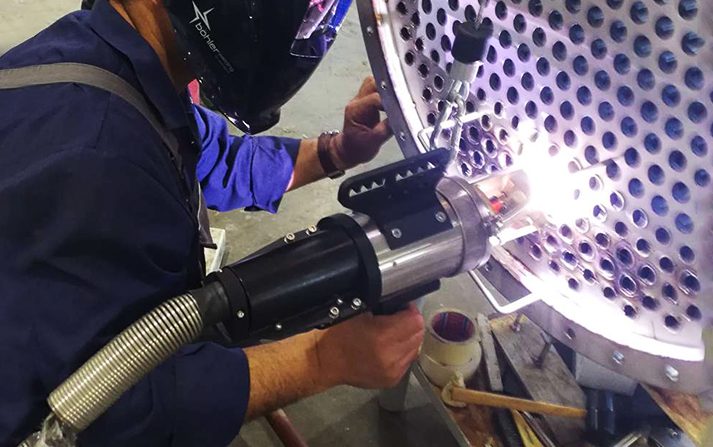
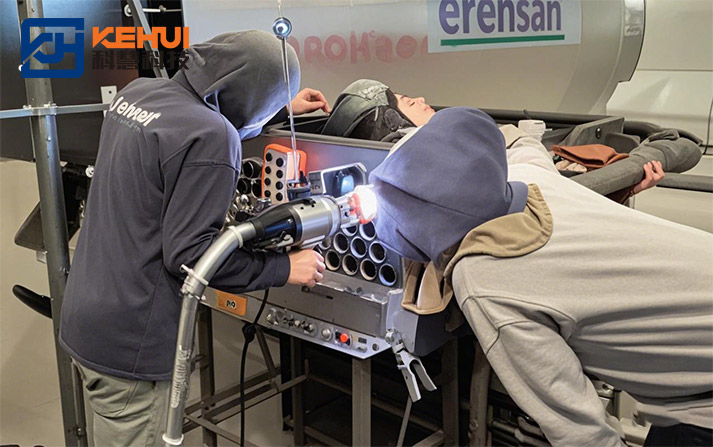
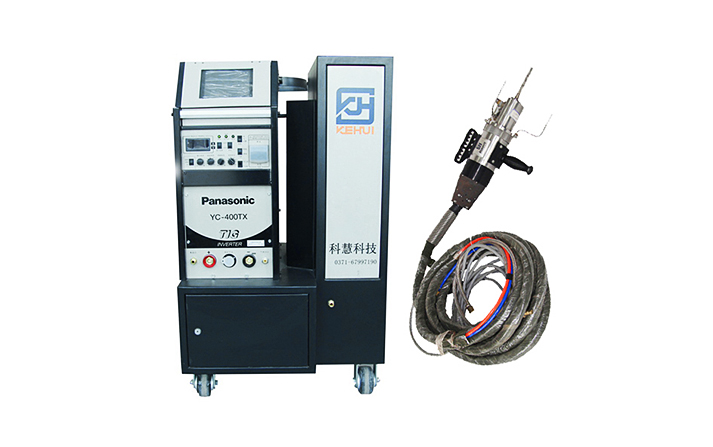
This is where a automatic tube to tubesheet welding machine becomes essential. An automated orbital system controls every variable that affects weld strength: arc length, travel speed, current pulsing, and wire feed synchronization. The machine executes the qualified procedure exactly the same way on tube one and tube five hundred.
Our systems use specialized tube-to-tube-sheet orbital welding heads designed specifically for strength weld applications. These heads feature water cooling channels throughout the body, enabling continuous operation at high currents without thermal shutdown . The enclosed design ensures proper inert gas coverage, which is critical when welding materials like stainless steel or nickel alloys where oxidation would compromise strength.
The heads center themselves on the tube ID using expanding mandrels, ensuring the tungsten is concentric regardless of tube ovality. If the head is off-center, arc length varies, penetration varies, and the tube to tube sheet joint strength becomes inconsistent. Three-axis tungsten adjustment allows precise positioning for different tube sizes and joint configurations .
Joint Configurations for Strength Welds
The geometry of a strength-welded tube to tubesheet joint affects both weldability and load capacity. Three configurations are common in boiler and pressure vessel work:
Protruding tube joints are the most straightforward for strength welds. The tube extends 2-3 mm beyond the tubesheet face, and a fillet weld is laid around the circumference. This fillet adds throat thickness and creates a mechanical lock. The tube-to-tube-sheet orbital welding head must be set up with an appropriate torch angle—typically 5-10 degrees—to direct the arc into the corner.
Flush tube joints can also be strength-welded, but they require deeper penetration to develop adequate throat thickness. This often means higher heat input and tighter control to avoid burn-through. Some specifications require filler wire even for flush joints to build up reinforcement.
Recessed tube joints are used in some high-pressure applications where the tube end sits below the tubesheet surface. Welding inside a cavity requires specialized torch geometry and usually filler wire. Access is restricted, making orbital welding the only practical approach.
Research has shown that for welded-and-expanded joints, expansion length should be essentially the full tubesheet thickness minus a small margin, rather than the shorter lengths sometimes permitted by standards . This ensures full contact and maximizes joint strength.
Code Requirements and Qualification
A strength-welded tube to tubesheet joint must be qualified to meet code requirements. The ASME Boiler and Pressure Vessel Code, Section VIII and Section I, specify how strength welds must be designed, qualified, and examined .
Qualification typically involves welding mock-ups, sectioning them, and examining macro-etch samples to verify penetration and freedom from defects. For strength welds, the cross-section must show that the weld throat meets or exceeds the design requirement. Some codes also require shear load testing to confirm that the joint actually develops the full tube strength .
The automatic tube to tubesheet welding machine used for production must be capable of reproducing the qualified parameters exactly. Modern systems include data logging that records every weld's parameters, providing traceability that code inspectors appreciate. If a question arises years later about a particular joint, you can pull up the exact current, travel speed, and wire feed used to make it.
Why Automation Wins for Strength Welds
The argument for using an automated automatic tube to tubesheet welding machine for strength welds comes down to consistency and documentation. A strength weld tube to tubesheet requires precise control. Too little heat, and you get incomplete fusion. Too much, and you risk dilution or burn-through. Pulse frequency must be tuned to the material—stainless behaves differently than carbon steel, which behaves differently than chrome-moly alloys.
A tube-to-tube-sheet orbital welding head running a qualified program eliminates the guesswork. The operator loads the head, starts the cycle, and while the machine welds, they can inspect completed joints or prepare the next tube. Production rates increase while defect rates drop.
We have seen fabricators reduce rework on strength-welded tube bundles from double digits to under 2% after switching to orbital welding. The consistency means every tube to tube sheet joint meets the design requirement. No weak links, no surprises during hydrotest, no field failures.
The Bottom Line
In boiler and pressure vessel fabrication, the strength-welded tube to tubesheet joint is not optional—it is the difference between equipment that runs for decades and equipment that comes back before the warranty expires. These joints must carry load, resist fatigue, and maintain integrity through thousands of thermal cycles.
Achieving that reliably across hundreds of tubes requires the right equipment. A automatic tube to tubesheet welding machine with precision tube-to-tube-sheet orbital welding heads and qualified procedures removes the variability that leads to inconsistent strength welds. It lets you focus on engineering and production while the machine handles the execution.
If you are fabricating boilers, feedwater heaters, or pressure vessels that demand strength-welded tube joints, come see what our systems can do. Bring a sample tubesheet, and we will run it on our floor. You will see the difference in consistency, in penetration, and in the data. No sales pitch—just decades of helping people build code-compliant equipment correctly.





 Chinese
 English
 OA
OA Current location:
 Concrete Mixer Drum Robotic Welding Solutions
 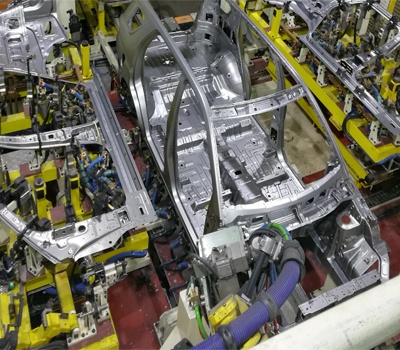 Automobile Body Production Line Welding Fixtures
 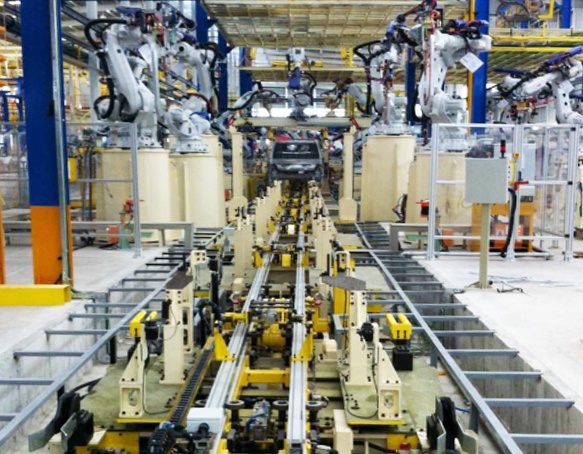 Automotive Body Welding Automated Manufacturing Solutions
 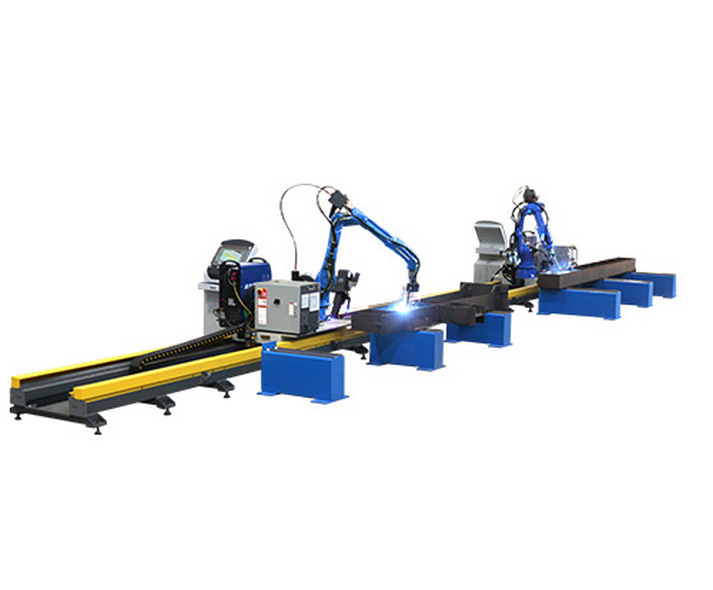 Free-Teaching Programming Welding Robot Cell For I Beam Welding
 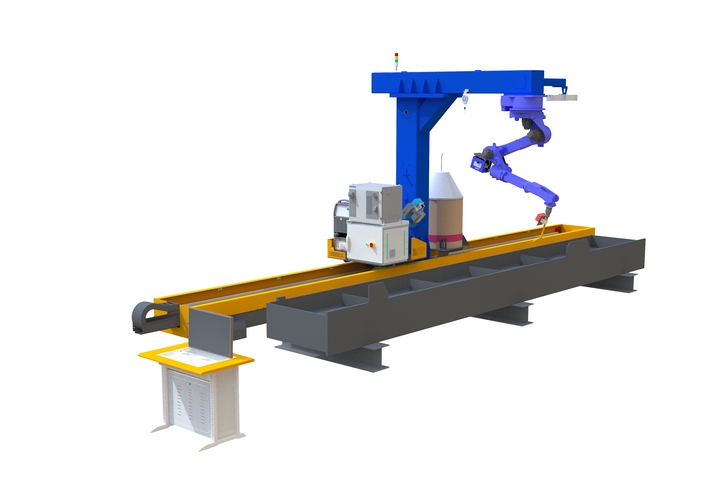 No Programming Required Robotic Welding Systems for H beam Welding Line